
We’re currently in a period that has historically been very favorable for long-term Bitcoin accumulation.
The Technical Setup
Bitcoin has shown a very consistent pattern with the 200-week moving average (200WMA) relatively to its 4-year cycles.
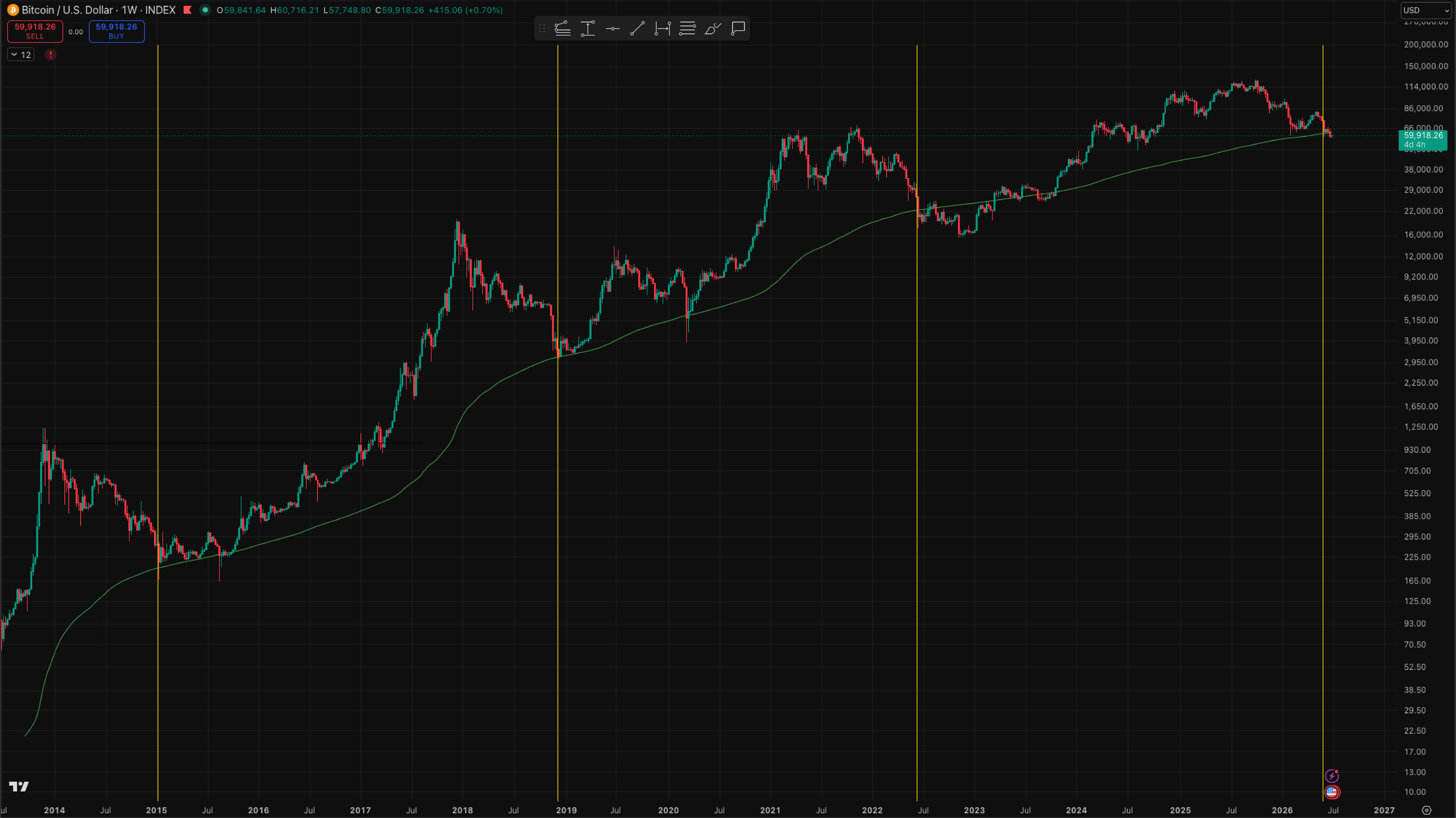
Every major cycle low has either touched or briefly gone below this line before recovering strongly.
• 2014 cycle: BTC briefly went below the 200WMA in January 2015, then broke out strongly later that year.
• 2018 cycle: BTC touched the 200WMA in December 2018 and bounced, before briefly breaking below again in March 2020 due to the COVID crash.
• 2022 cycle: BTC went below the 200WMA in June 2022 and remained under it for several months before breaking out in March 2023.
As of early June 2026, Bitcoin has crossed below the 200WMA again. Historically, this has marked the beginning of meaningful accumulation phases for long-term holders.
The Macro Context
This timing also aligns with a recurring macro pattern: US midterm election.
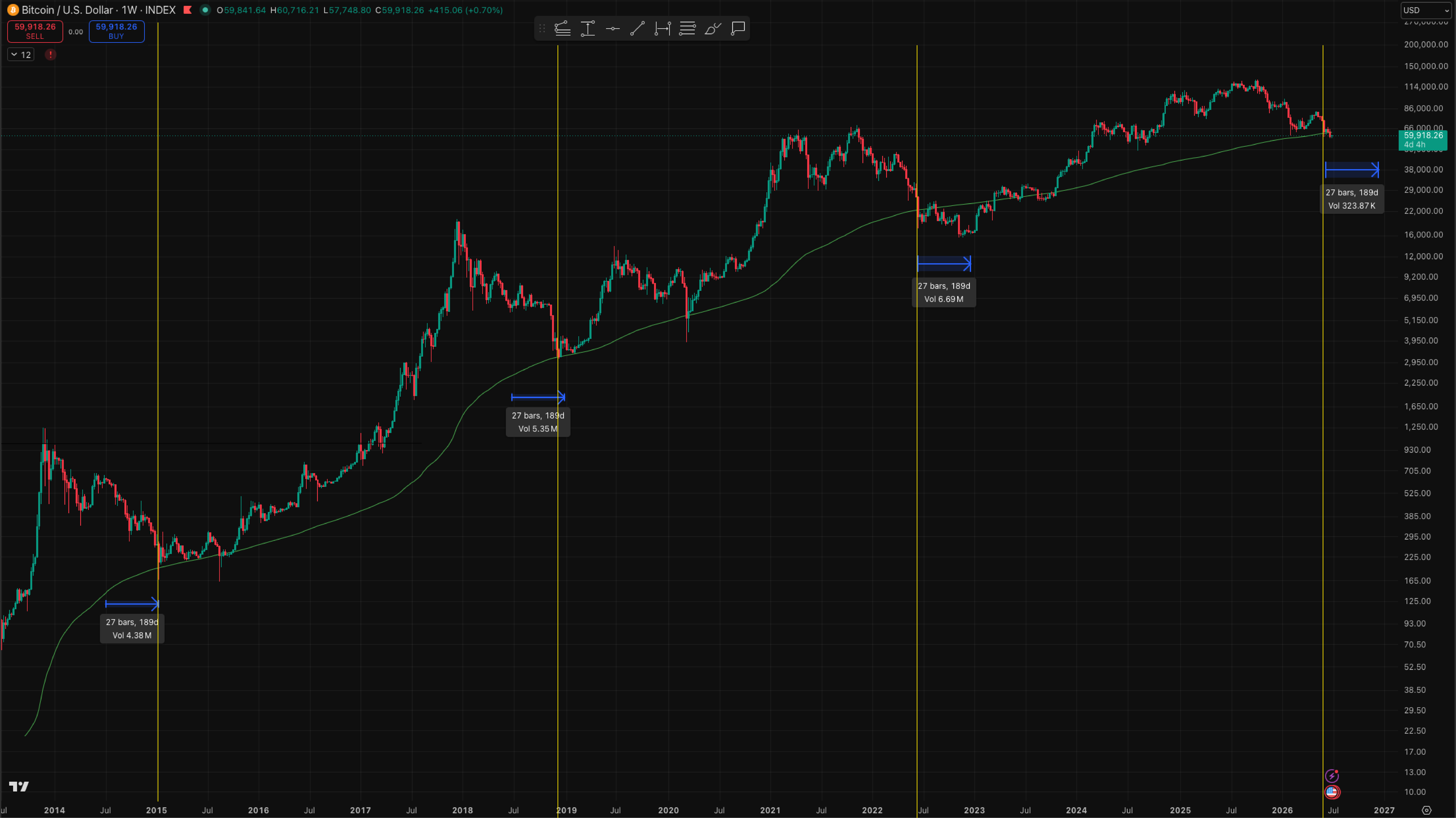
In midterm election years (2014, 2018, 2022, and now 2026), Bitcoin has shown a clear pattern of weakness during the second half of the year (roughly July to December). This period reflects how new presidential policies are actually playing out in the real economy after the initial post-election hype.
While the stock market has its own patterns during this window, Bitcoin has tended to be particularly weak, often creating some of the better buying opportunities of the cycle.
The Hodly Risk Metric
With over 13 years of data, the Hodly risk metric shows a cold market zone.
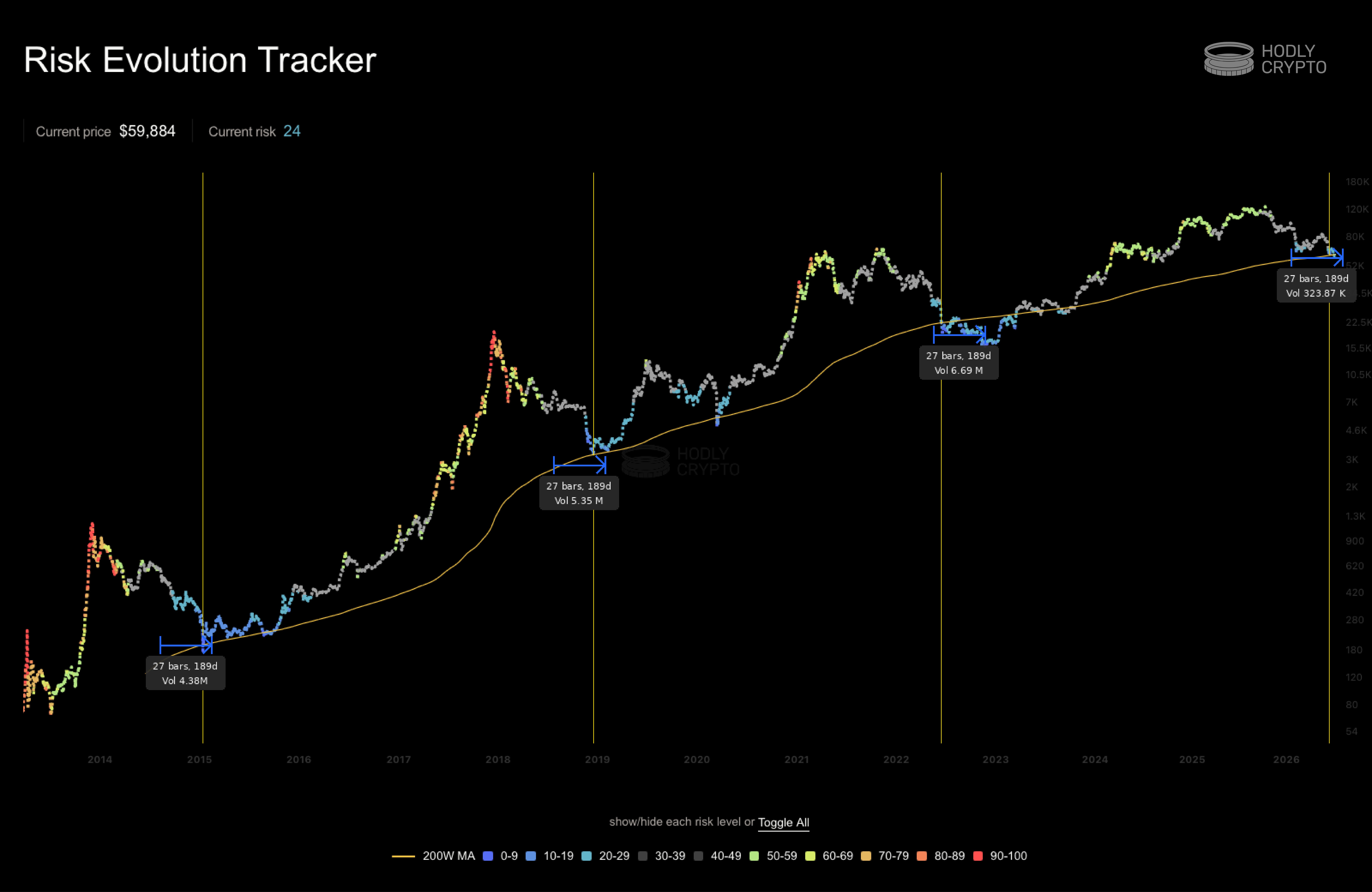
Historically, major accumulation zones have formed when the risk score drops below 29 (shown in blue/dark blue). Bitcoin has only spent about 22.3% of its lifetime in this low-risk zone. Right now, with price around $60K, BTC risk score is in hovering around 24.
Note: The risk score is intended as a reference to understand broader market conditions, not as a tool to predict exact bottoms.
What Matters Most
If you’re here for the long run, the exact bottom doesn’t matter as much as having a plan ready for this once-every-4-year opportunity.
Whether we rally from here, move sideways, or retest lower, the combination of:
200WMA support,
Midterm year seasonality and 4-year cycle theory
Low risk score
suggests we’re in a favorable accumulation period.
This doesn’t mean Bitcoin can’t go lower in the short term. It can, and it probably will at times due to news and sentiment. The question worth asking here is whether you have an accumulation plan ready to take advantage of it.
Having a structured approach that can automatically adjust based on market conditions can help reduce emotional decision-making and keep you aligned with your long-term goals. This is the kind of environment Hodly had in mind when building tools like Recurring Buy (automated DCA) and Adaptive Accumulation, so you can stay consistent without needing to monitor the market constantly.
In the end, Bitcoin’s biggest moves have often rewarded those who stayed consistent during the quiet, uncomfortable periods rather than those who tried to time perfection.